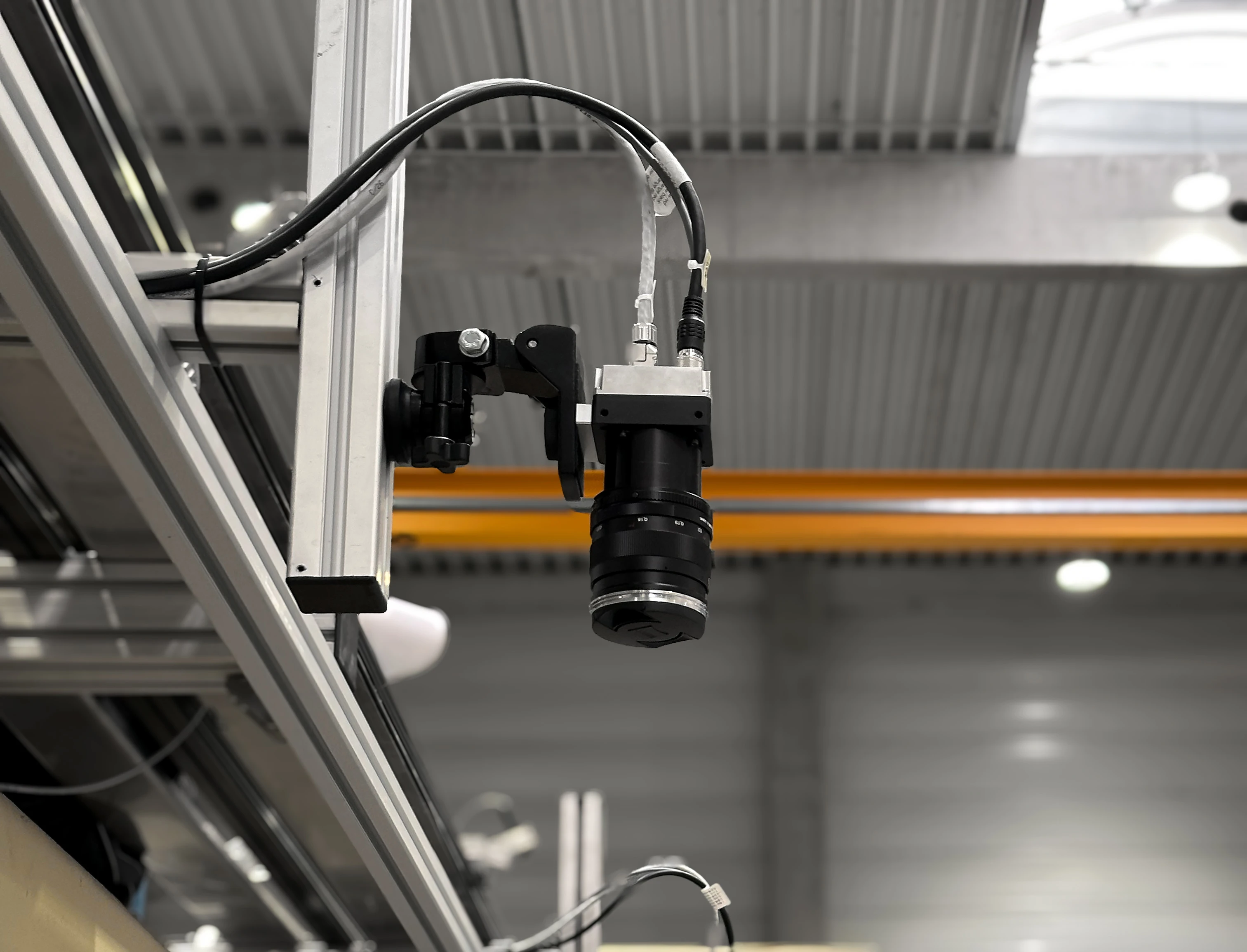
Industrial Vision System
Real-time monitoring system for industrial production processes detecting material deviations, foreign particles and process irregularities during operation.
- Machine Vision
- Line Scan Cameras
- Image Processing
- Machine Learning
- PLC Integration
- Germany
- USA
- China
Project Description
An integrated vision system was developed for a continuous winding process, monitoring material flows in real time and detecting defects directly during production. The goal was to replace manual quality controls and enable reliable, automated monitoring without interrupting the production process.
The Initial Situation
Our customer processes a material over several meters in a continuous winding process. During this process, ideally no material damage, contamination or foreign particles should occur.
The Challenge
Manual quality control by employees is practically impossible at these lengths and speeds. Defects such as small particles, holes or irregularities can easily be overlooked – with direct impact on product quality and possible complaints.
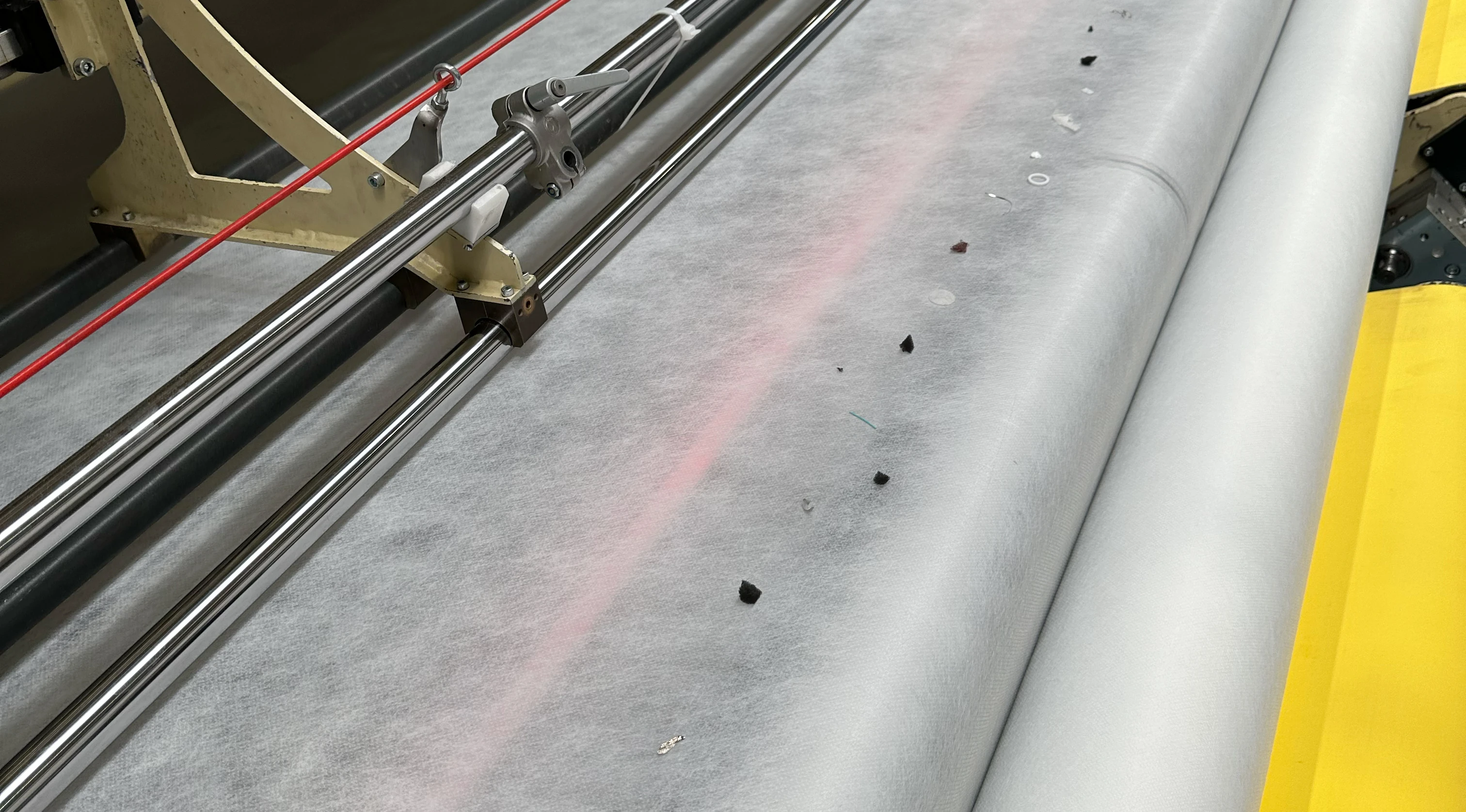
The Solution
Real-time inspection with machine vision
To safeguard this critical process, we developed a high-performance vision system and integrated it directly into the machine environment. Using high-resolution camera technology and intelligent image processing, the system continuously monitors the material during ongoing operation. The captured image data is analyzed and automatically evaluated in real time.
As soon as a defect is detected, the system responds immediately:
- Automatic stop of the machine
- Acoustic signal for the operator
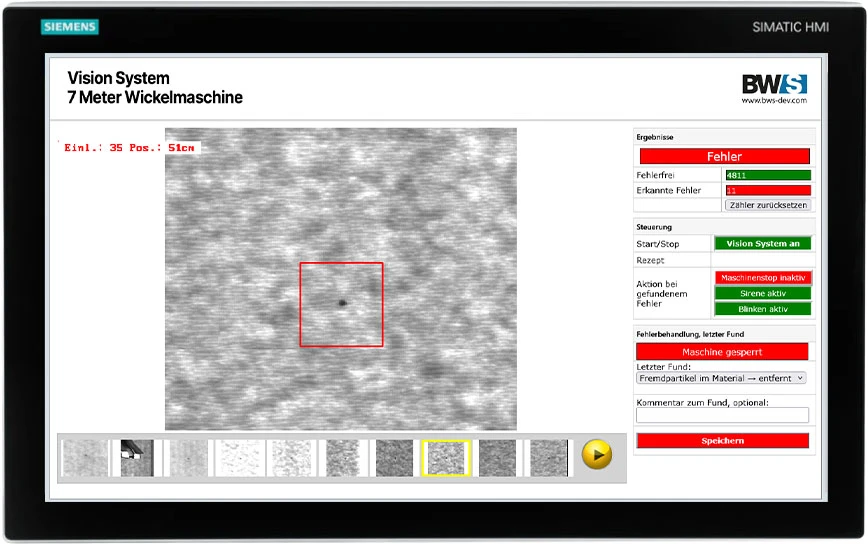
- Display of an image section including defect position
- Storage of the defect image for further analysis
This ensures problems can be identified and resolved immediately, before they affect larger areas of material.
Result
Visual inspection by staff is no longer needed. The system checks the material over its entire length at production speed and stops the machine before a defect is processed further.
Every detected defect is documented with image and position. Quality assurance uses this data for analyses and for complaints to material suppliers.
System design and key capabilities
Intelligent defect detection through machine learning
A central element of the solution is the self-learning defect analysis. The system uses machine learning algorithms to recognize typical defect patterns such as foreign particles or material defects. The system is continuously trained with new examples, so detection accuracy improves steadily during operation.
Defects that have already been detected are documented and made available for quality assurance (QA). This creates a transparent data basis for analyses, optimizations and possible complaints toward suppliers.
User-friendly operation
Operation takes place via a web-based user interface ("Operator View"), which is flexibly accessible across the machine network.
There, employees have access to:
- Live images from the process
- Overview of all detected defects
- Access to stored defect images
- Control options for the system
This ensures control is maintained at all times – without disrupting the production flow.
Hardware & Integration
For reliable inspection, a specifically tailored hardware solution was implemented:
- High-resolution line scan cameras for continuous image capture
- Powerful image processing computers for real-time analysis
- Dedicated lighting systems (light bars) for optimal defect detection
- Direct connection to the PLC for synchronization with the production process
The system is seamlessly integrated into the existing machine environment and works fully automated in the background.
Value for the customer
Using the vision system delivers clear benefits:
- Significantly reduced product failures through early defect detection
- Automated quality control without additional staffing effort
- Transparent defect documentation for quality assurance and complaints
- Relief for employees, who can focus on value-adding activities
- Continuous improvement through self-learning algorithms
More projects
From a PLC retrofit to a software platform of our own. The following projects show how varied the tasks are in practice.
- EPLAN
- TIA Portal
- WinCC Unified
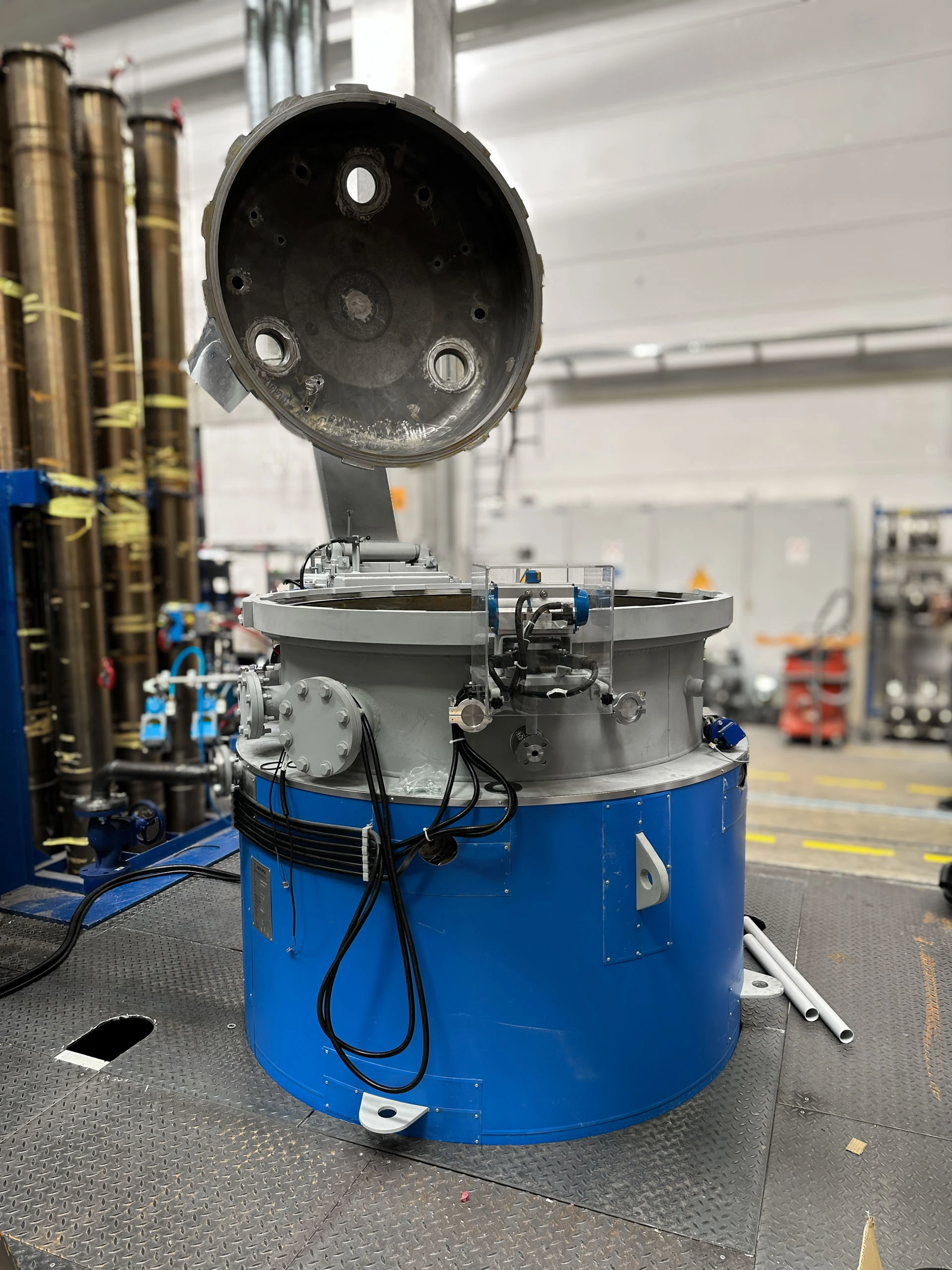
Autoclave Control
Development of a control and visualization solution for an industrial autoclave with automated process sequences.
View Project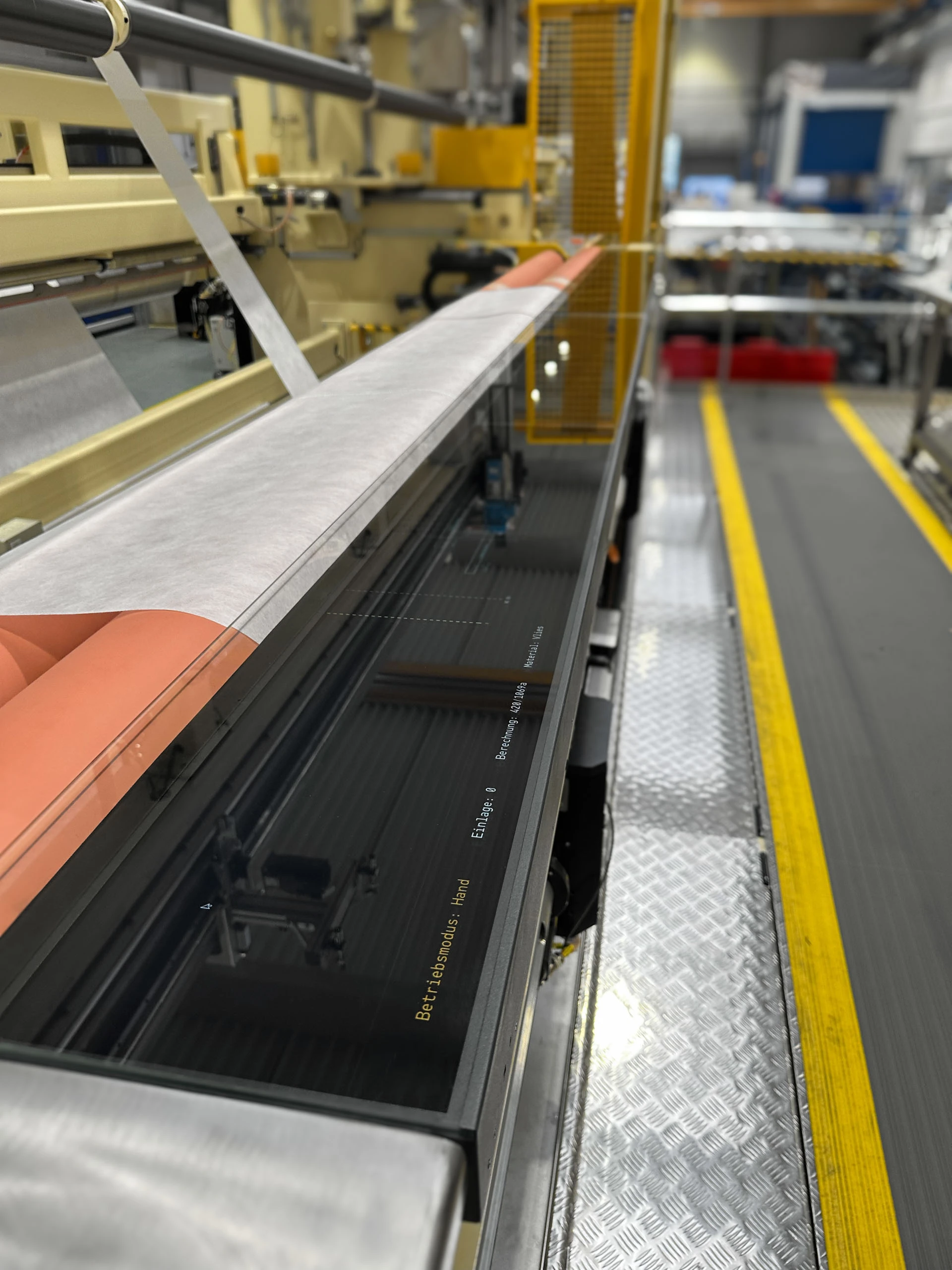
- PLC Integration
- Software Development
- HMI Visualization
Digital Schematic Display System
Custom digital display and control solution as a replacement for paper-based production plans. Fully integrated with PLC systems and custom hardware components.
View Project
- Modbus
- OPC UA
- SQL
Industry Data Connector
Custom integration platform for centrally connecting machines, control systems and IT systems. Fully integrated with industrial communication protocols and existing production infrastructure.
View ProjectDo you have a project in mind?
Tell us briefly what it is about and what is not working today. We will get back to you with questions or an initial assessment of whether and how we can help.

Electrical engineering and software for industry and production. From Cologne.